
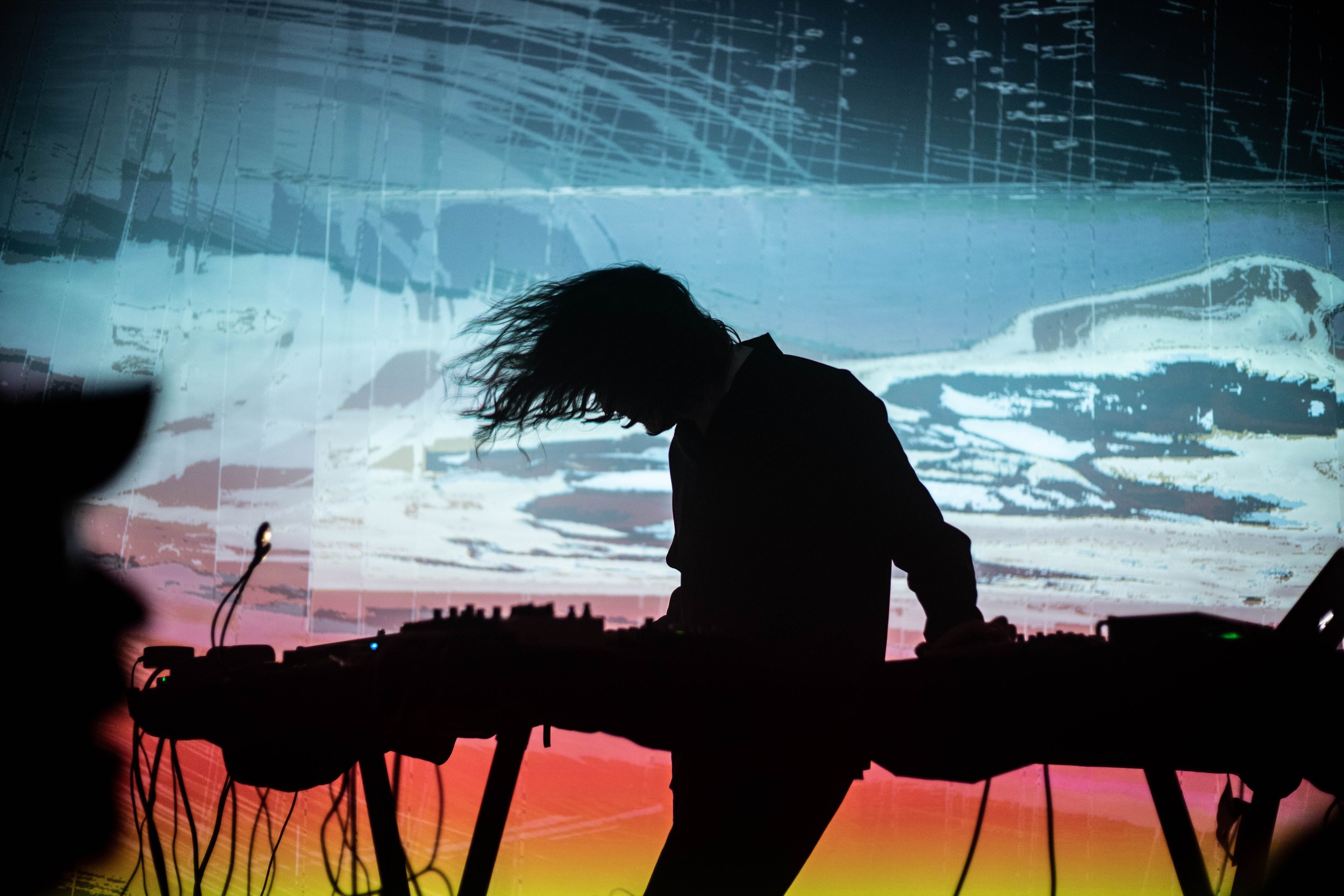

Rival Consoles :: Hagop Tchaparian
Lodge Room, Los Angeles
(10/7/23)
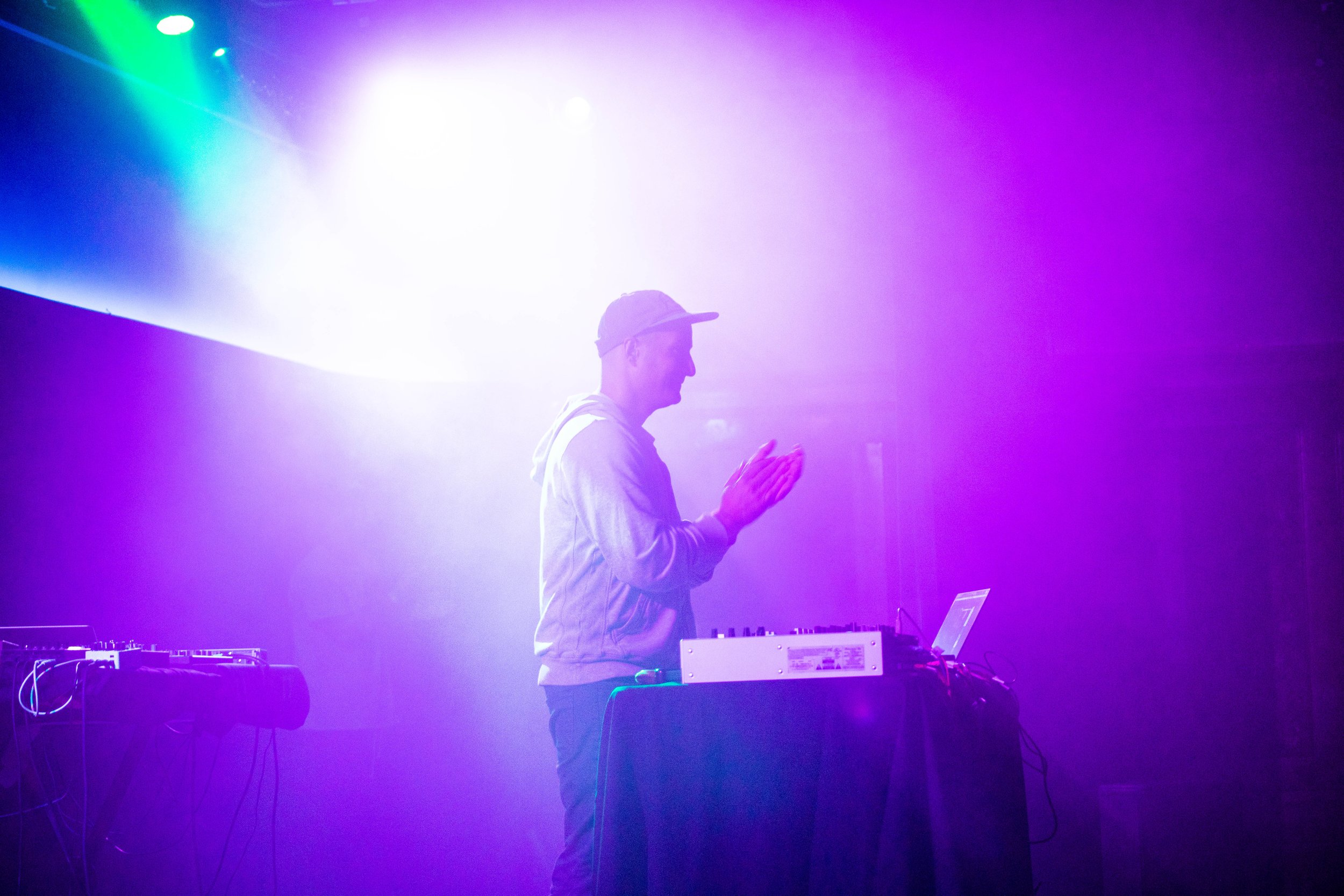
Shot by Charissa Clark
Written by Charissa Clark & Esteban Allard-Valdivieso
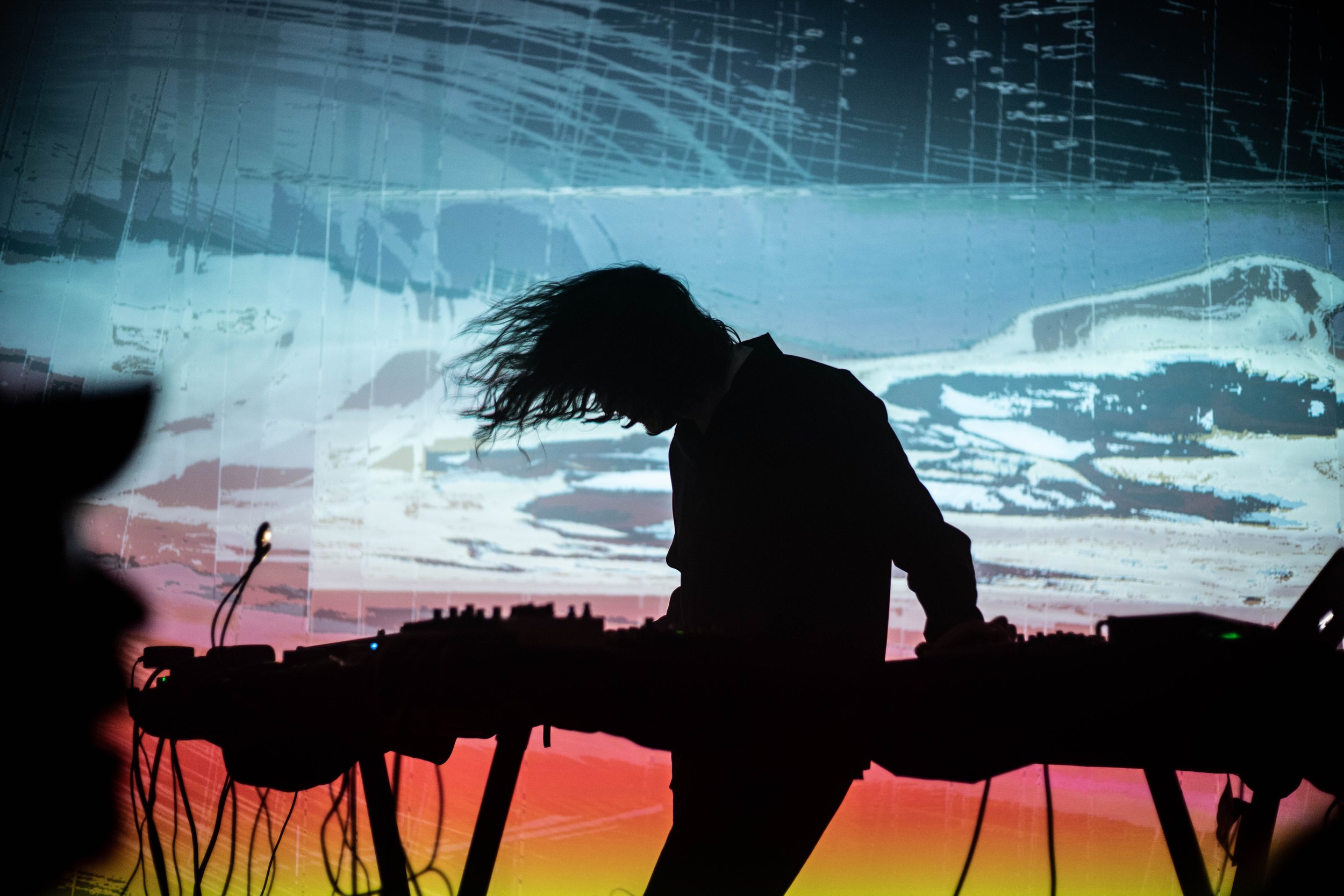
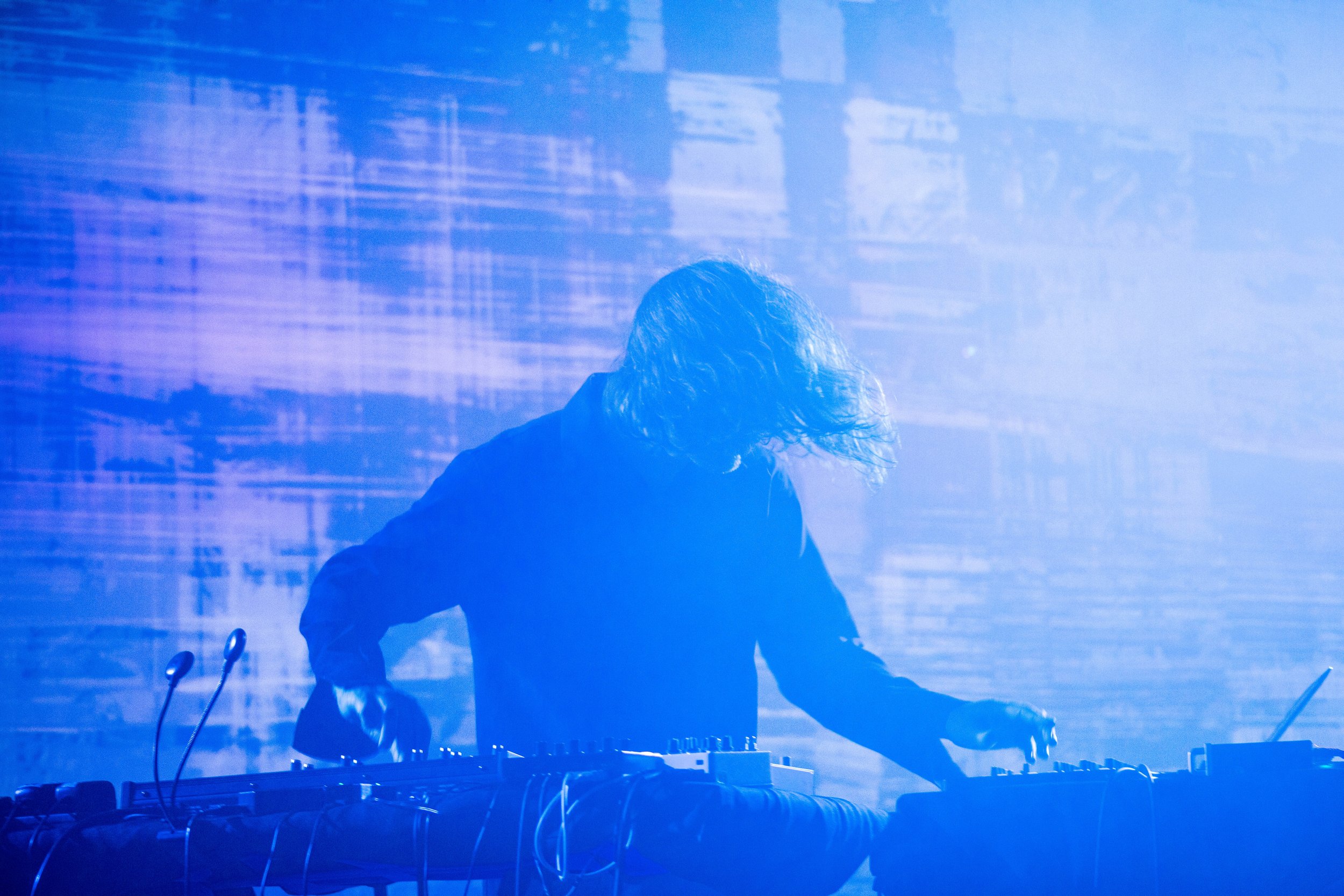
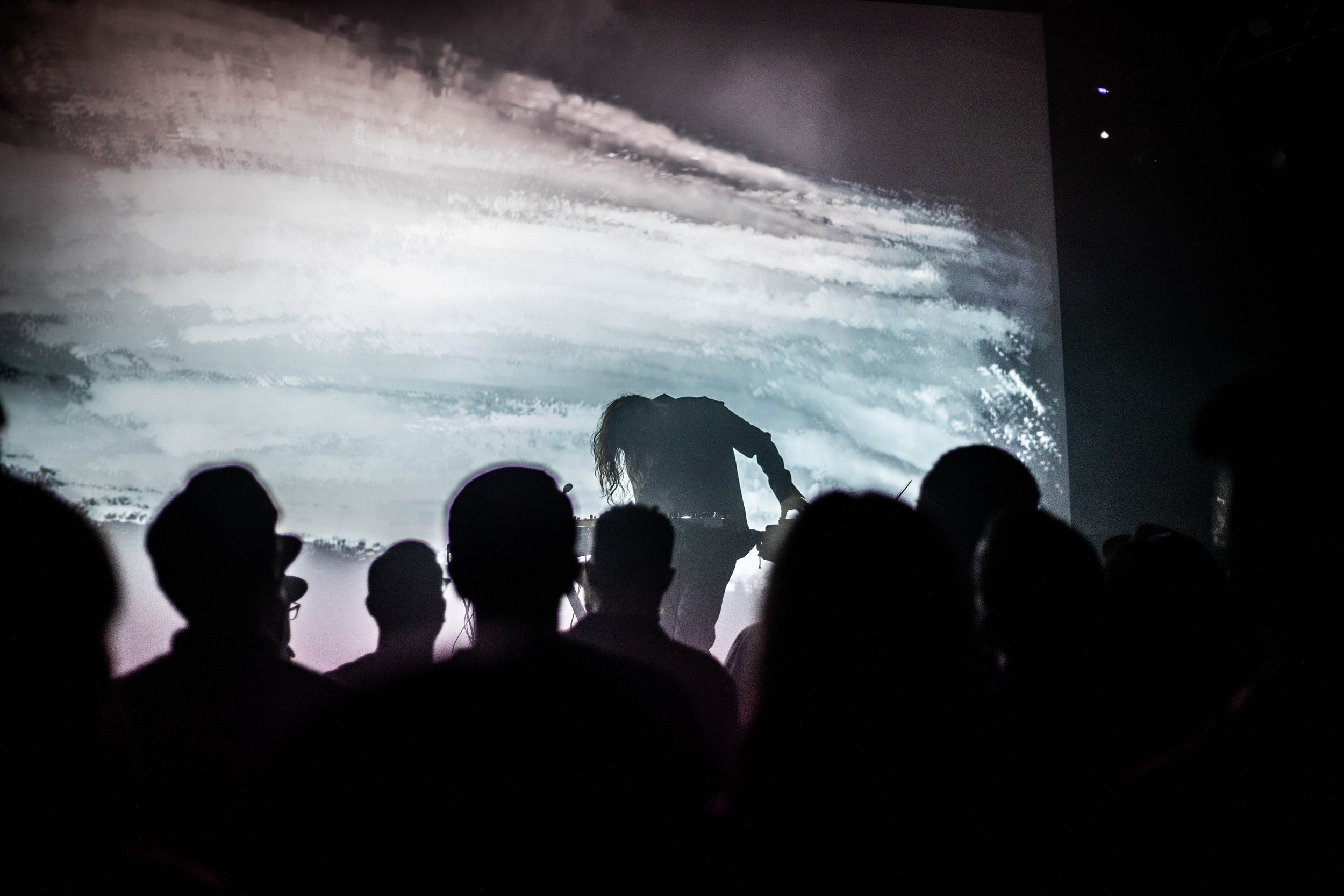
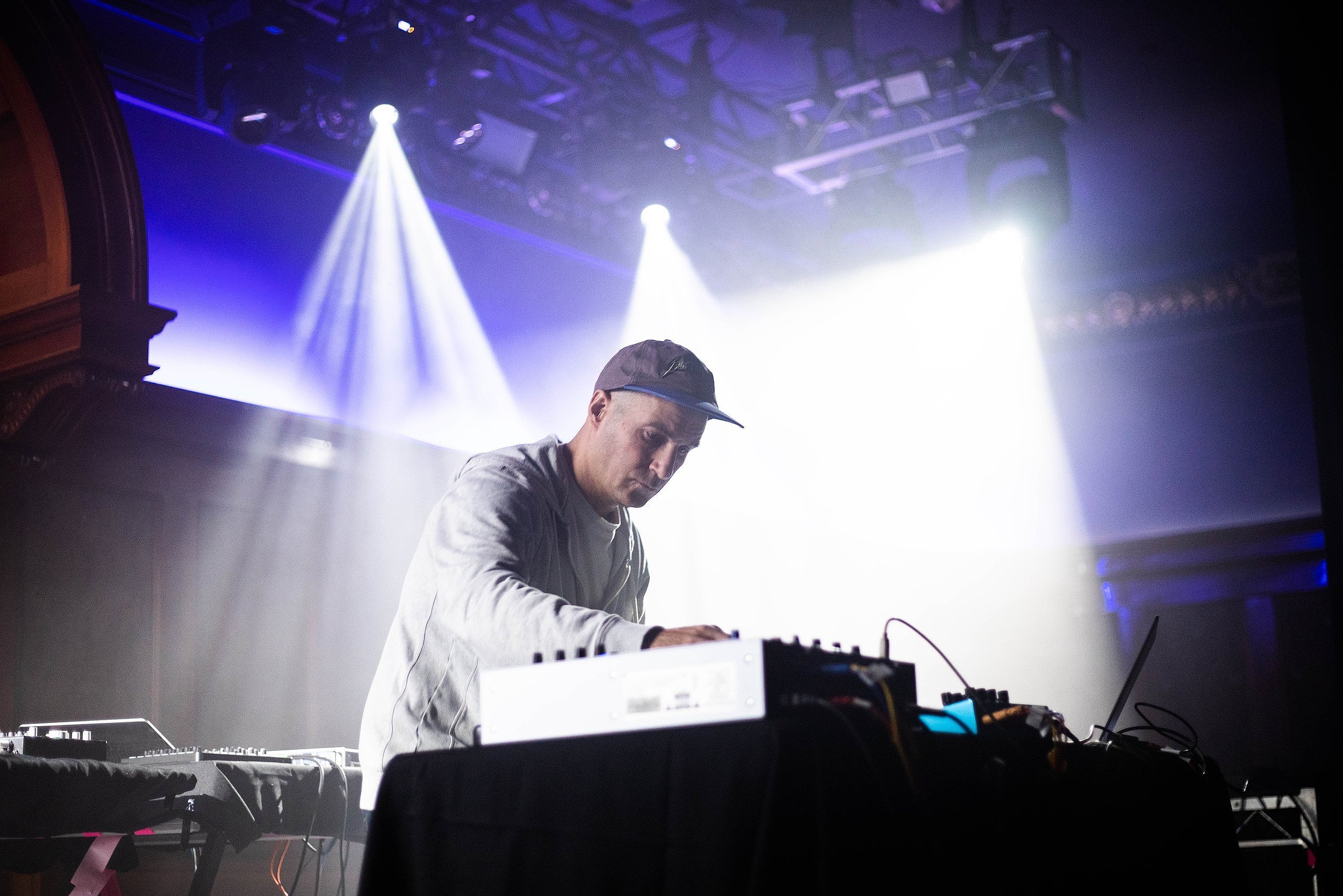
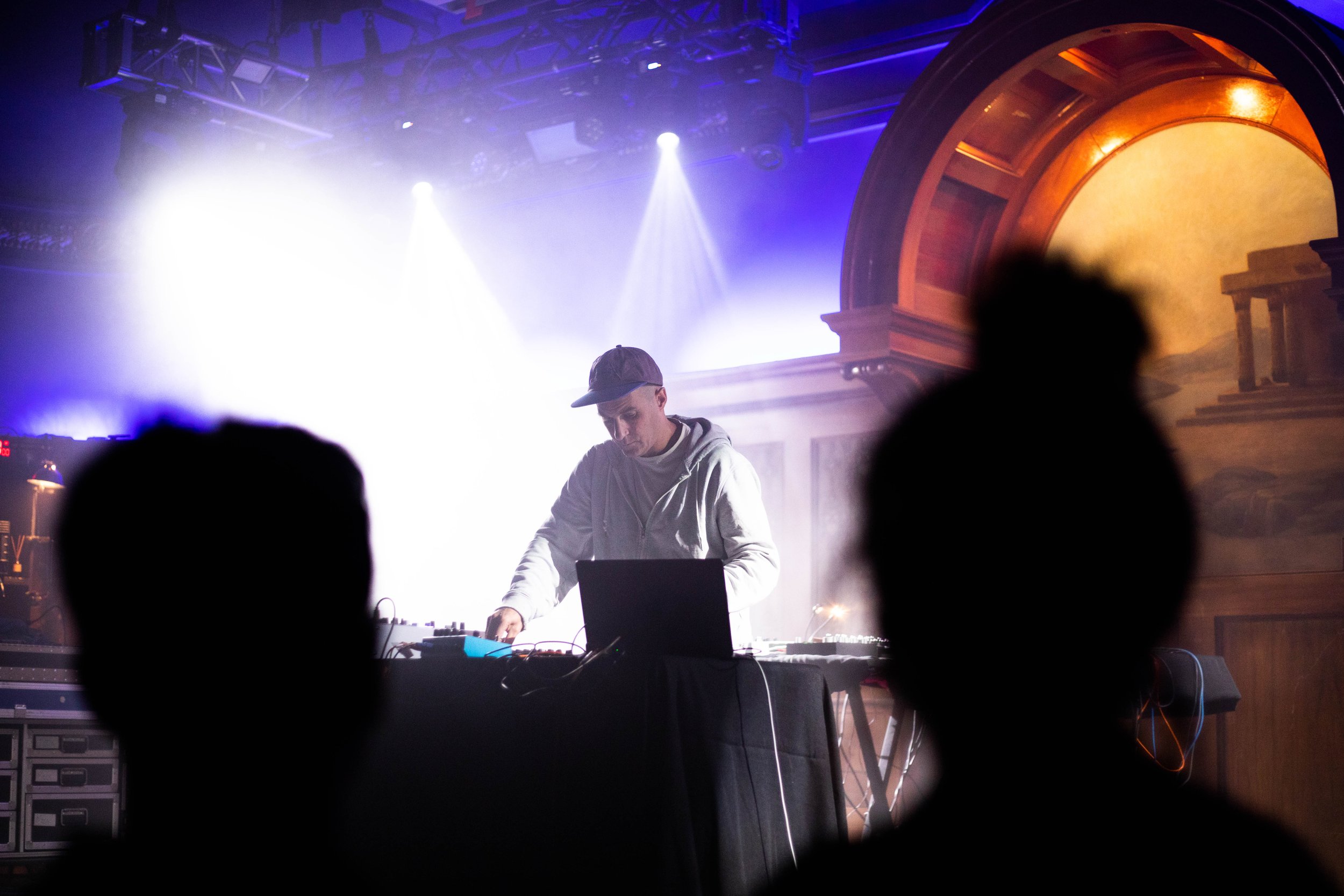
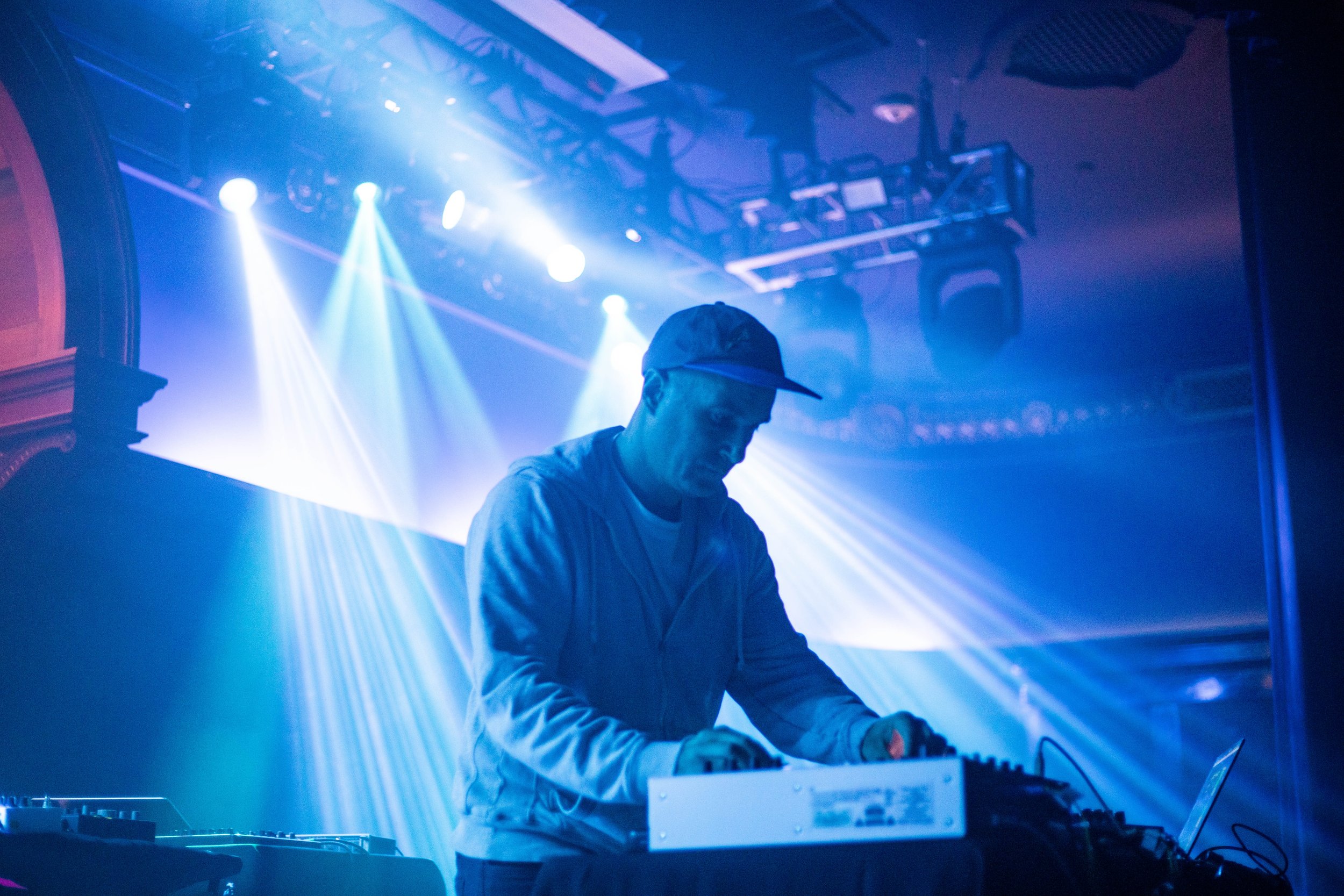
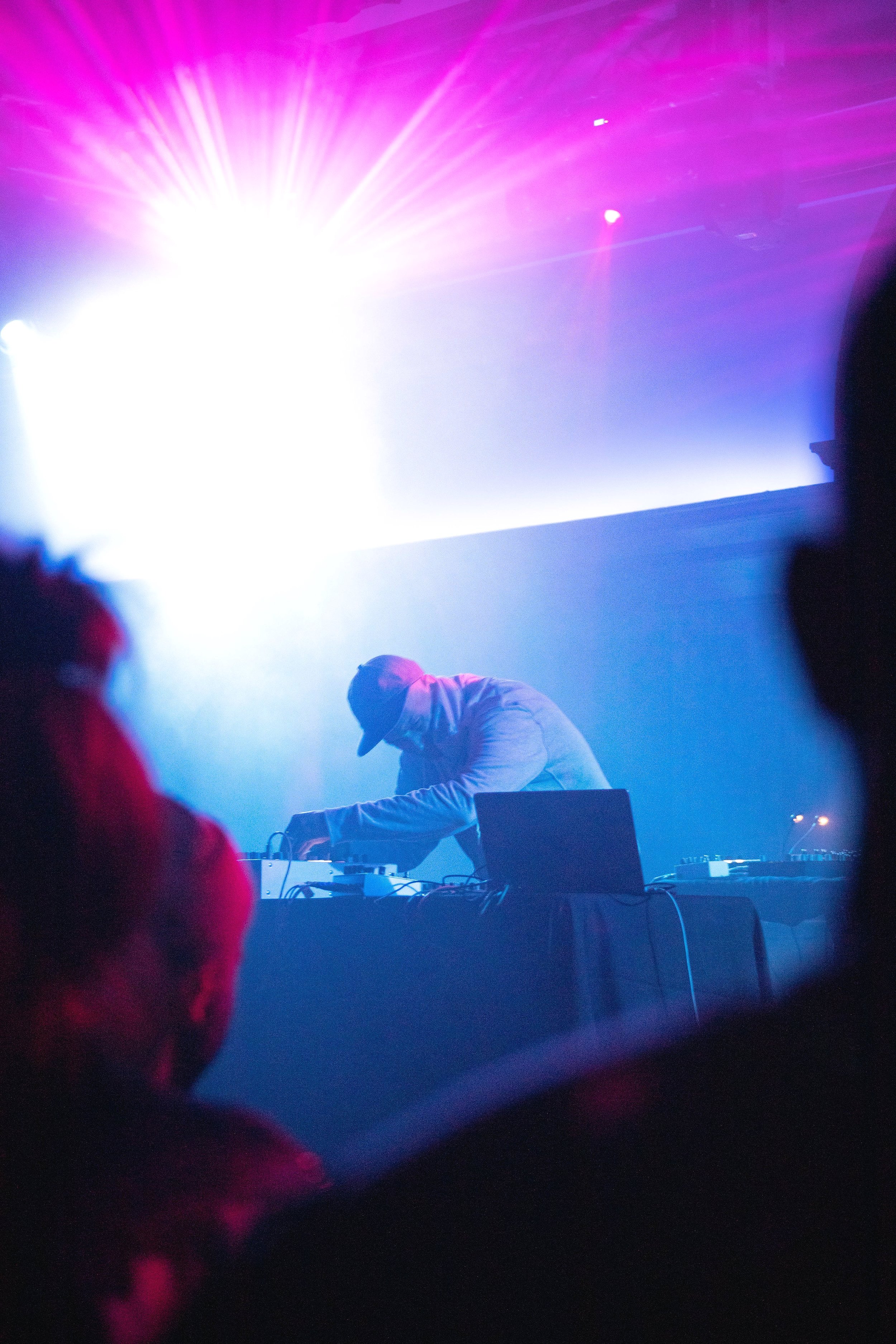
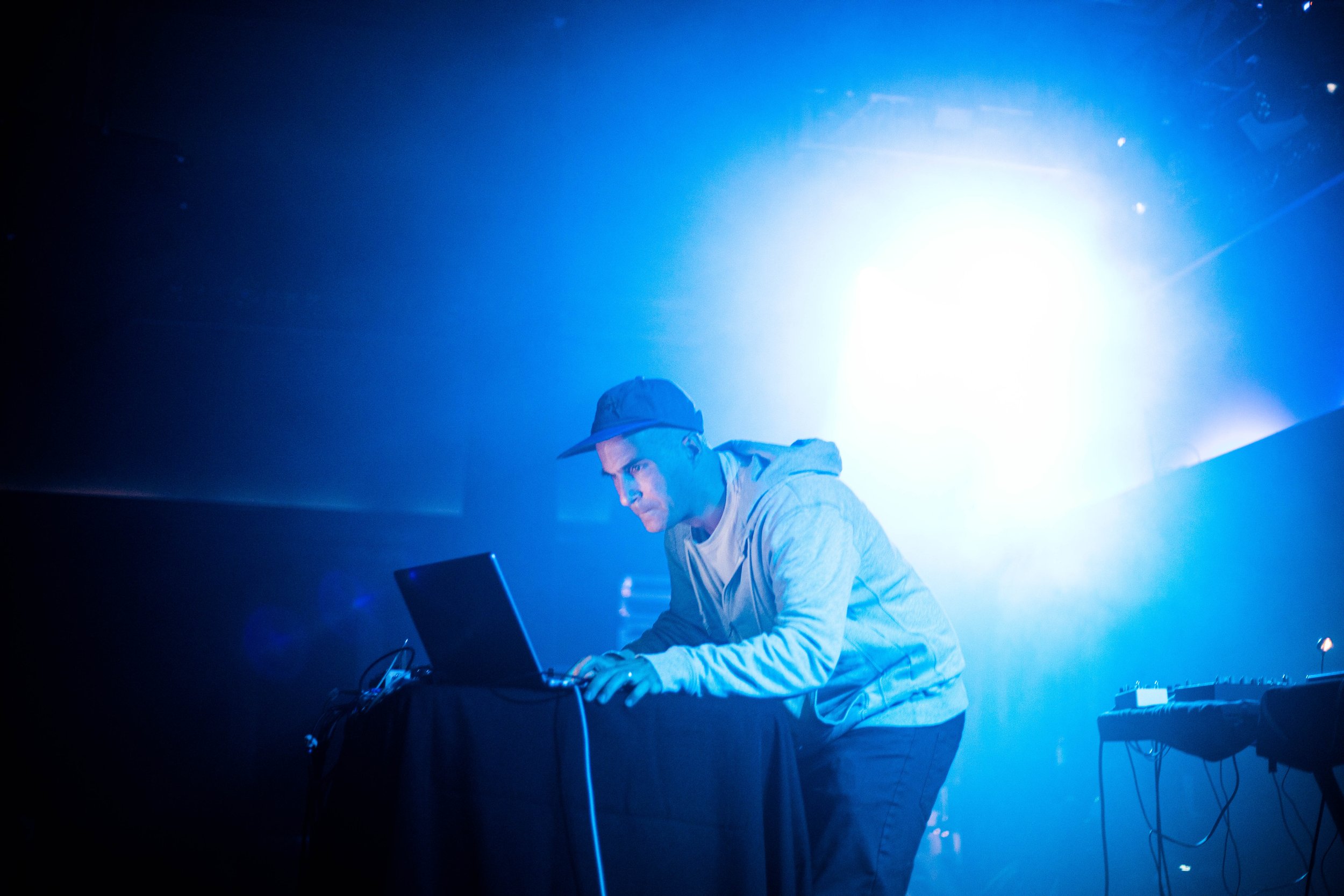
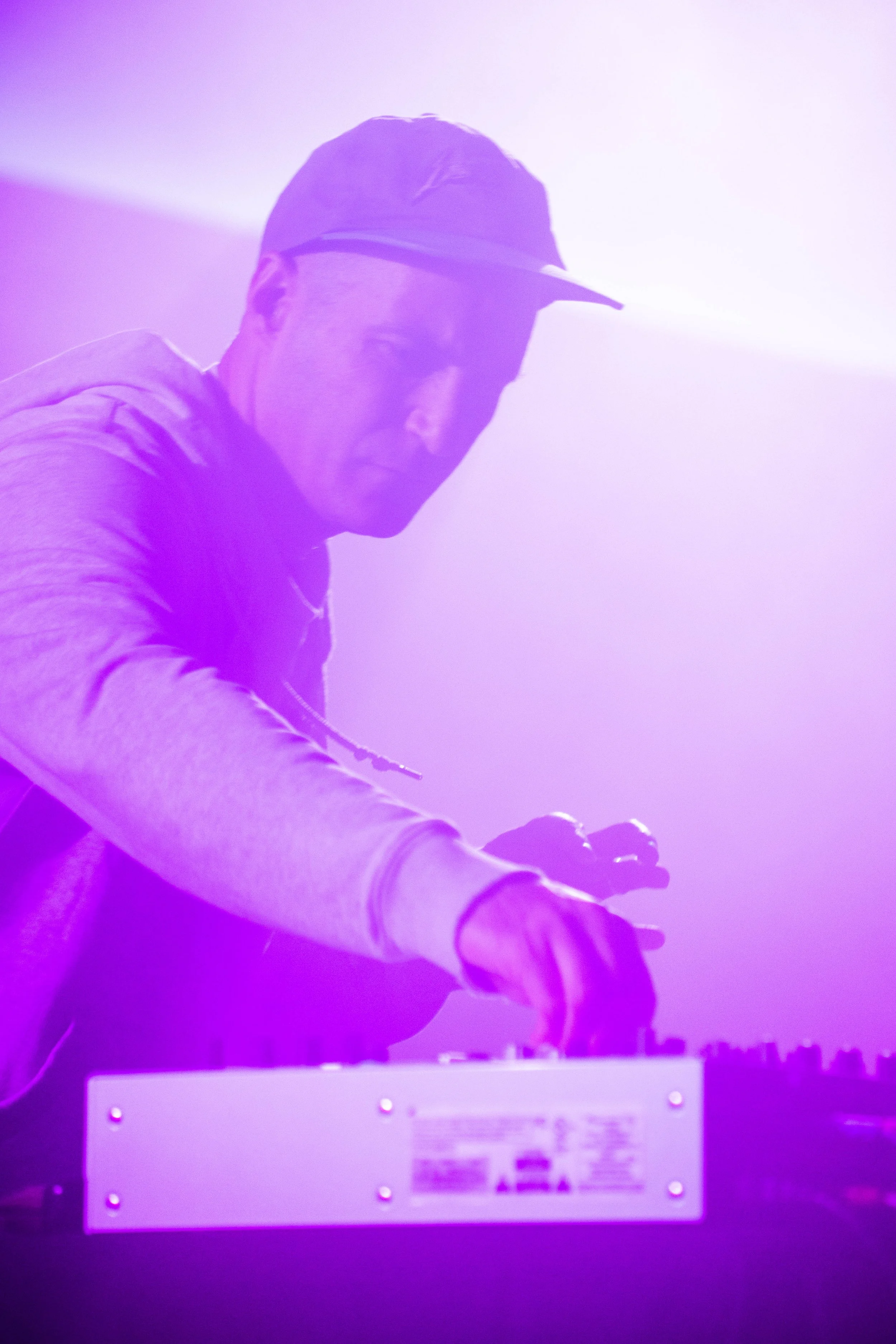
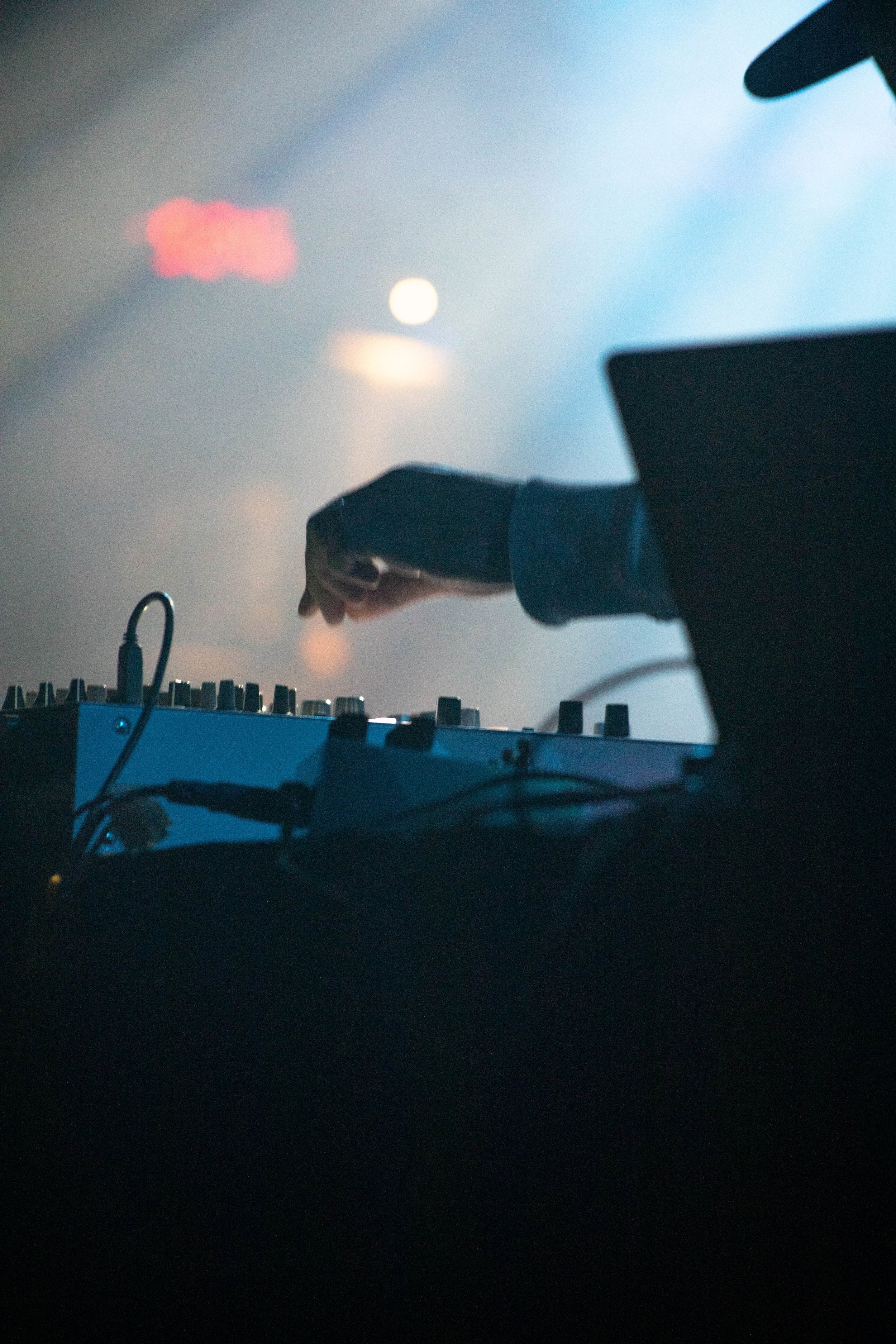
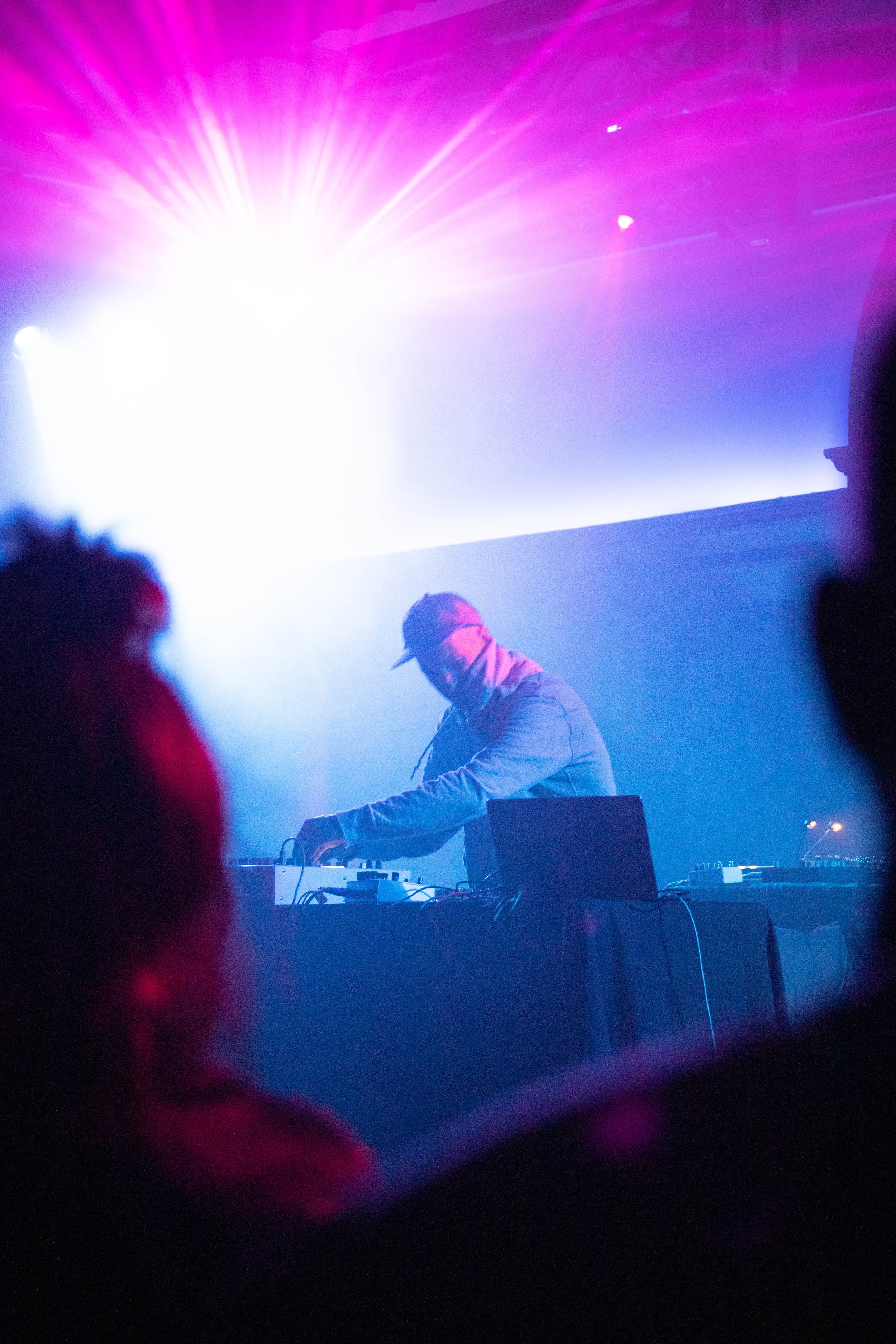
MFM’s own photographer Charissa Clark interviewed UK electronic music master Rival Consoles (Ryan Lee West) after his Lodge Room show about music, inspiration and new music software. Check out his new album Now Is released in 2022 on Erased Tapes Records.
Charissa: Hello. Where are you from?
Ryan: I grew up in Leicester (Midlands) but moved to London when I was 23.
C: How did you get the name Rival Consoles?
R: A combination of gaming consoles like Playstation/Nintendo and also the idea of duality despite being a solo artist.
C: Who and/or what inspires your music?
R: So many things ranging from films, books, music…

C: How did you get into music? Specifically this genre of electronic music? I read you are a guitarist who grew up listening to rock.
R: I gradually drifted towards [electronic music] over a 10 year period, but actually if you examine a lot of my music you can find that I use synths in a similar way to how guitarists use pedals and sounds in genres like post-rock, shoegaze and alternative rock etc.
C: What inspired the new album Now Is and its creative direction?
R: The album is very playful and melodic to me. I wanted to contrast my previous album, which was very dark. Inspiration came from many places including relationships ending, the pandemic, sensitivity towards more delicate ideas in composition/sound.
C: How does scoring for shows like Black Mirror episode “Striking Vipers” differ from how you score for your own shows?
R: There is a lot of direction and working towards the vision of others when writing to film. When I make my music it is more like a world I create that is entirely my own and then I share that with people, in the hope that it resonates with people.
C: I read you like to make your synthesizers sound human. How? Why? Is that unique compared to others in your genre?
R: I mean it’s not that they sound human, it’s more that synths naturally sound very pure and precise and without the sense of context. I prefer to degrade synths and manipulate them in such a way that they are less pure and feel more like they exist in the real world, which to an extent makes them seem more human or naturalistic.
C: What does it feel like to perform by yourself without bandmates? Were you ever in a band, and if so, why did you branch out to a solo career?
R: It can be lonely and weird, but at the same time the music really is a demonstration of my ideas. So when it is just me on stage, it is a very direct translation of how I make music, which I think people connect with. I have been in bands which are usually dysfunctional and difficult to write within.
C: You did a workshop not too long ago, in February, about synthesizers. Why did you decide to do one? What did you learn from teaching others what you love?
R: It was a lovely experience, especially because I was surrounded by equipment that I didn’t know much about, so I could explore and engage with a very new perspective. I also liked to share my perspective on making music and what I think is helpful advice and what I feel are helpful honest accounts of the problematic aspects of working with computers and synths.
C: Who in the future would you like to collaborate with and why?
R: I’d like to try collaborating more with vocalists. This is something I haven’t done for many years proper, but I think it could really change the way I write music.
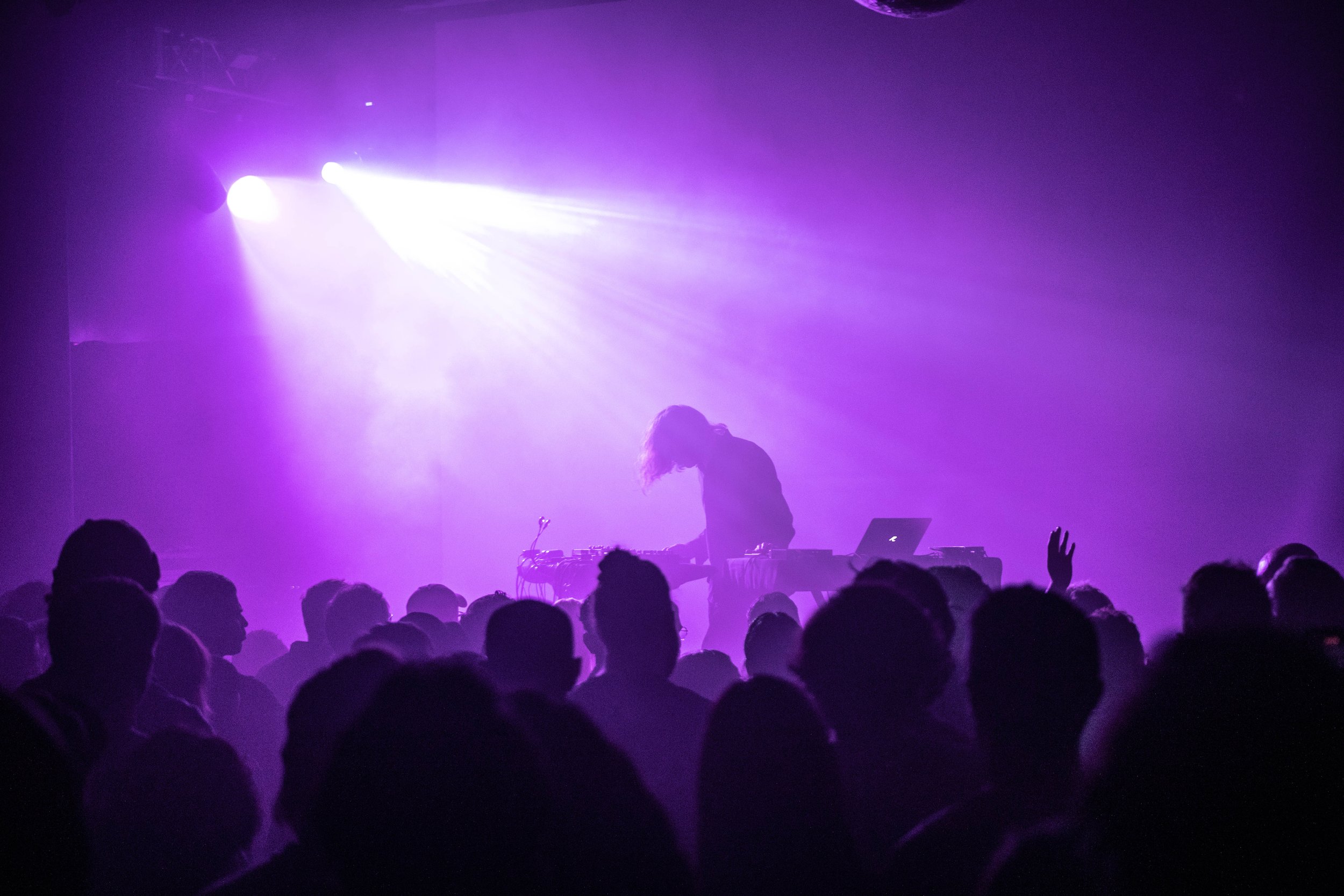
C: What about your music has created such a strong fanbase for so many years, 15 years to be exact, especially since there aren’t any lyrics? What’s the secret? Are lyrics overrated and distract from the music/story?
R: I am not entirely sure, of course I put huge amounts of effort and care into the pieces that are released and I do find the process of making [music] therapeutic to me and a form of escapism. A lot of people say my my music helps them in terms of mental health, which is probably the biggest compliment I can receive, so I guess my music is quite cathartic for some people.
C: I saw on your website the visuals you created for an installation at the V&A Museum. How did that opportunity arise? How do you create your visuals? Where did you learn the software (Jitter)? What’s the inspiration behind the pieces: an overarching theme or does it vary depending on time, emotions, location, music, etc? Do you use them in your shows? Do you have a favorite piece, and if so which one?
R: I created this visual instrument in Max/MSP/Jitter, which is a programming language I learnt at university. The idea was to take pictures of the giant tapestries, and then create 3D structures out of them, so that the old became something new and alive in the space. The music I created for this was extremely abstract, even to the point of me being lost within the general sense of where I am in the sound. It was great to go against normal expectations of performance.
C: You stated on your site that “Over the past 5 years I have been sketching compositions on paper. Sometimes they are detailed, specific outlines of what I imagine for the music, sometimes they are how I would like a synth to sound, sometimes they are me thinking out loud about the structure of the music I am working on.” So, you visualize your sound before you create it, or are you hearing it then visualizing it, then putting it into audio form? Is that how most musicians in your genre create their art or is this unique to you? You also stated, “The main reason why I do this is because it is a way for me to problem solve away from the computer. I find the computer is so powerful at trying things quickly that it can get in the way and overpower some of my decisions.” What have you experienced in the past, with the computer, that has made you want to disconnect, in a sense? What was it doing for you regarding problem solving that affected your ability to do it yourself?
R: Firstly the sheer options that are very quickly accessible can easily confuse your intentions, ideas, etc. Knowing that I can constantly add or undo actions undermines how committed I am to an extent, and what ends up happening is a kind of blind and drunken stumbling through ideas and materials, until I find the results that connect with me the most. Conversely: when working away from the computer I get to plan ideas with a slower, more grounded thinking, which allows me to better understand what it is I want to do, because I don’t always know, especially when I am absorbed into the act of doing.
C: Where do you hope to be in your career in the future or are you already there?
R: I mean I am very happy and fortunate that I can make music in my working days. I take it seriously, but as far as the future goes, I dream to make music that is more free and expressive.
C: What (musical) piece are you most proud of and why?
R: Perhaps ‘Recovery’ as the idea, sound and feeling are executed in a way that it feels instantly understood yet still maintains mystery to be listened to many times without it feeling tired somehow.
C: What question would you like to be asked but rarely are asked, when doing interviews?
R: “What synths that just come out will inspire a lot of creativity?” Synplant 2 - as it can try to recreate synth sounds from dropping a reference which is incredible and something that many people have dreamed of for decades!
Hagop Tchaparian
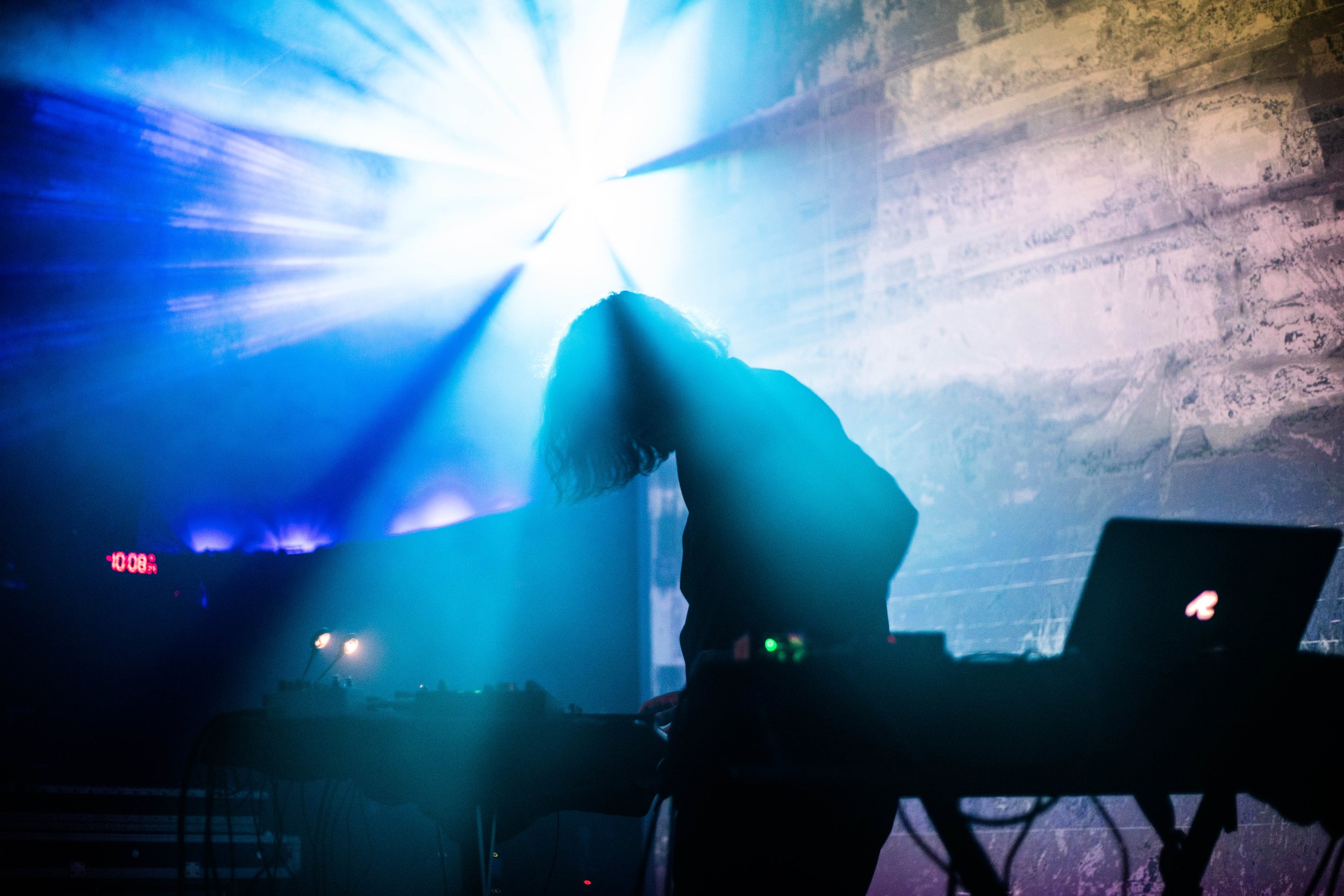
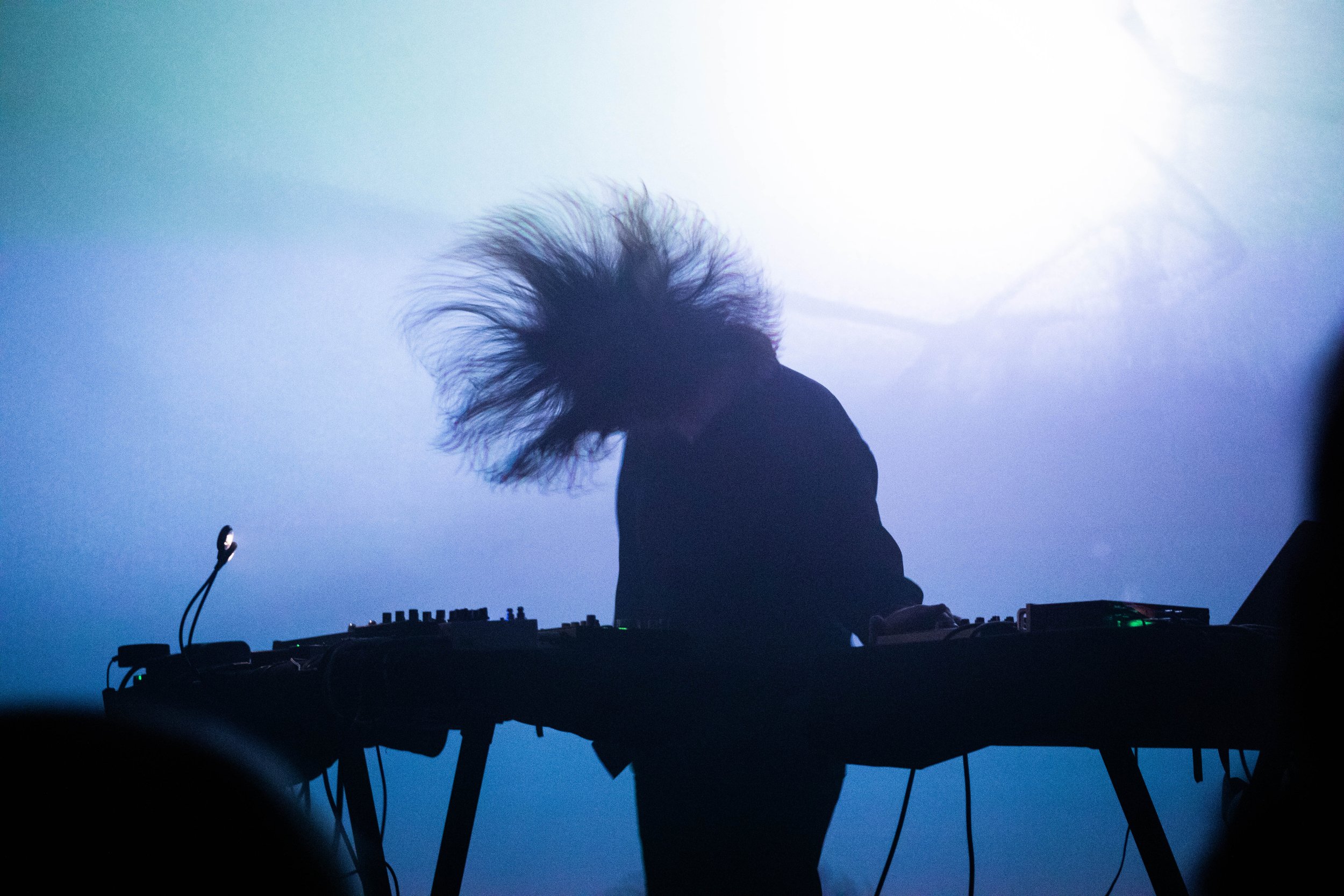
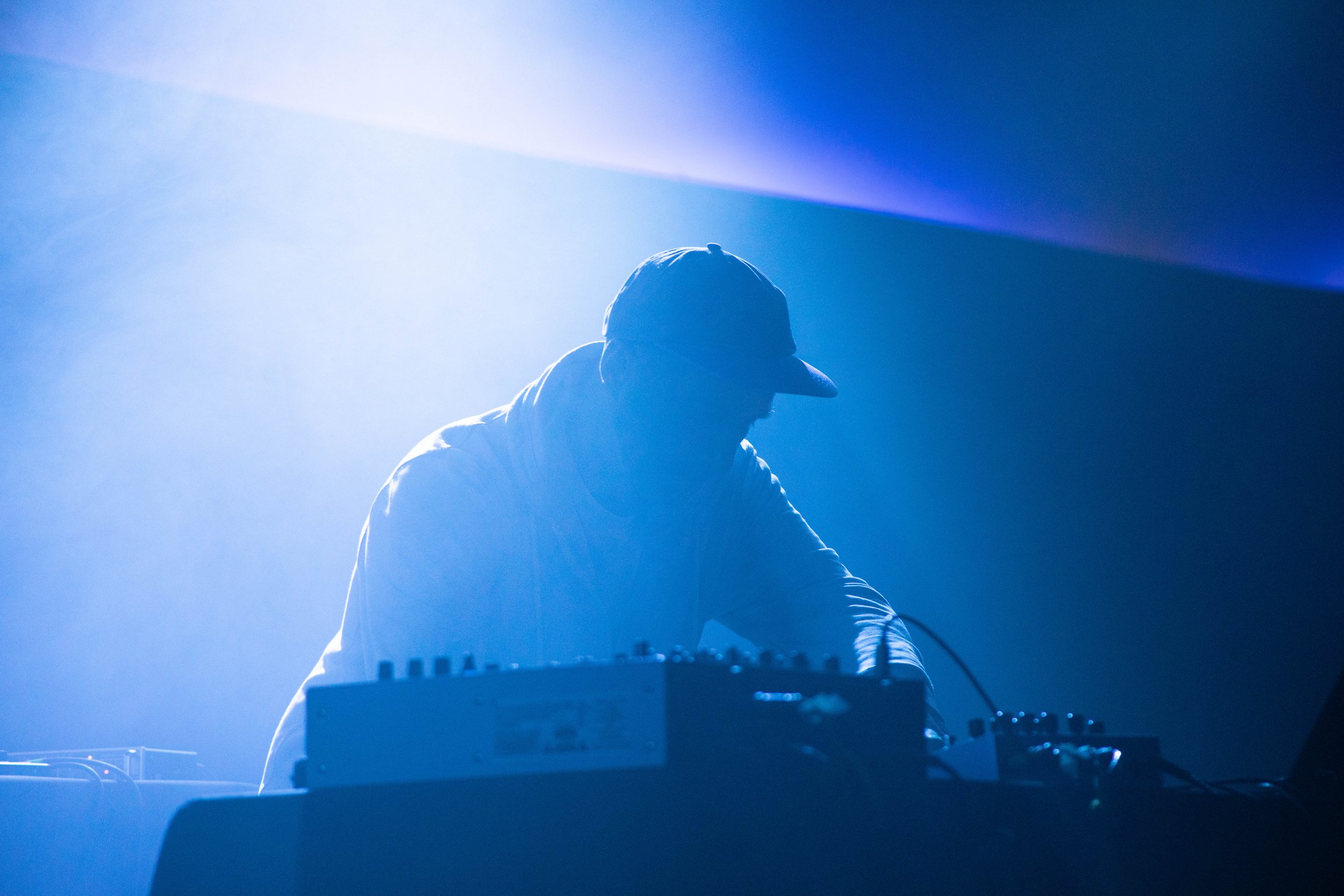
Esteban Allard-Valdivieso sat down with Hagop Tchaparian the day after the show to talk about electronic music, touring and fatherhood. Hagop’s debut album, a lush weaving of traditional Armenian and global melodies, collected ambient sounds, and danceable electronica, Bolts, released in 2022, has received much critical acclaim.
Esteban: Hagop, how’s it going?
Hagop: Good.
E: How did you find the L.A. show?
H: Umm, it was good. It was a good turnout. It was…fun [laughter]. I haven’t even thought about it, it was only yesterday, hold on…
E: What’s up with the L.A. scene, how many times have you played L.A.?
H: Never, that was my first time ever.
E: Did you like the sound?
H: It’s a really great venue. The sound was really good. It was very loud, very pumping and the audience was really into it, so that was good. I got a lot of people come up to me afterwards. People were upset that I wasn’t selling merch.
E: Oh really?
H: Yeah, so that was nice.
E: They would have bought some t-shirts?
H: Yeah, I haven’t really ever given that whole thing any thought to be honest, but I reckon—yeah it was really nice. I also got to, I spent a day in the studio, making some music with a couple people and working. I left [there] at like 6 in the morning, or at 7, so I started working at 8a in the studio and then I was in the studio all day and then basically went to the show at 7p. So it was really productive.
E: Awesome.
H: Yeah it was really fun.
E: Did a bunch of Armenians people showed up to support?
H: Actually at every single show I’ve done pretty much, about 80% of the shows I’ve done, somebody has come up to me and said ‘Hi, I’m Armenian or half-Armenian’, but also I’ve had quite a lot of people who’ve said like, ‘I’m half something or half something else or whatever, have different mixed ethnicity’ and for some reason that resonates with them, though I don’t know why exactly. Perhaps because I’ve maybe juxtaposed some music in some way, I don’t know. I’ve had a lot of discussions with people…
E: Are there specifically Armenian influences in the music? I don’t know what the instrument is in Right to Riot.
H: Yeah, there’s definitely Armenian stuff, but also I’m mostly just influenced by being in the club, or at being at a dance music event. That’s the main thing. The rest of it just kinda seeps in because it’s just I grew up listening to that music and I find it moving. But also I feel like it’s important to, when you make dance music, when you make electronic music, you can just be like, ‘Oh I’m just going to use a 909 and a synthesizer’ and that’s great, but I feel like, that’s not me. There’s other strings to my life, so I think maybe that’s what comes out in the music. Yeah I think there’s like an energy to it, almost like tribal music, as in tribal dance music. Yeah, the rhythms. But I’m also actually interested—I can’t necessarily—I don’t want to jinx it, but my work with some…[hesitantly] South America continent—not to be specific, I don’t want to jinx it—like drummer percussion people, to kinda link up with them. Because I really am moved by the Armenian music, but I think I’m like interested in rhythms. You can listen to something like eh, but then you listen to something else and you’re like oh what the hell, you want to move around. And I really want to do more of that. I’ve been collaborating with a lot of people too. Like one of the tracks on the album, this guy, his son, he’s like fourteen or sixteen and he said, “Can I send you some loops that my kid made on Garage Band?” So I said yeah. And then actually, one of the loops was so good, and I found it really moving, so I turned it into a song. And then that might be the single after the one coming soon. That guy’s called Hazen. That track, it seems to be like, when I play that, people seem to be like, what was that track? I get a lot of questions about it, so it seems like it’s one of those, oh ok it’s not just me that finds it catchy. That was the interesting thing. I think I’m just kinda like, going along and seeing what’s coming my way. Trying to listen to see what is piquing my interest or whatever, coming to me, and then putting it all into something. So it’s like, following rabbit holes, kind of vibe.
E: Is there a possibility of playing in Armenia. Is that a thing?
H: Yeah, there’s talk of it already. One of the meetings I had yesterday was about that in L.A. actually. There’s been talk about this for a long time, but nothing is concrete yet. But yeah, there’s always [laughing]…
E: …Playing Yerevan…
H: …Yeah, I don’t know. Yes there is. But in the right way. It would be fun to do. But the most important thing I want to do is just finish this next album and also like, some of these collaborations, or not necessarily collaborations as such, but working with people in the studio or like working with other musicians recording samples. [Birds chirping] Even just recording these bird singing or something. I just want to collect more. I’ve got bare bones of things, but I want to collect it all together and make a thing that’s like, wicked this is the next thing.
E: Are you collecting analog sounds?
H: Everything, all sorts.
E: You build it up?
H: Sometimes, some of it is. Like one of the things, is like this thing when [my son] was born, when I went to get my car from the carpark, next to Kaiser, there’s this multi-level concrete carpark, and I whistled. And I could hear it reverberating in different carparks, one after the other. So I was just whistling and that turned into one of the things on [the song]. You can’t really hear it in that thing, but that was in there. Like I said, you know you’re just walking down the street, down the street of your life and then something pops out in front of you, you’re like, oh let me follow it. And nine times out of ten nothing happens...
E: Right, so how did you start in music? What’s like the origin story? Did you play music as a kid?
H: Yeah.
E: What did you play?
H: I think my dad made me and my sisters sing together. And then after that, I have tried to play piano and a few things at school, but I really wasn’t that into it. Sang a little bit. And then bought a guitar, a really cheap guitar and taught myself to play some power chords by watching videos of people playing music. And then played in a band, and then just kinda went from there.
E: What was the band?
H: It was this rock/pop band called Symposium. Kinda played around for nobody in London, mainly we just kinda played to ourselves like in rooms, going out, letting off steam. And then, one thing lead to another…
E: How did you get into electronic music? What was the impetus to move on?
H: After the band, I started going to…I was around in London more and I started going to more clubs and also working outside clubs and around that kinda thing to make more money, like marketing of clubs. And I loved the music and I went to a lot of different things. London was—it still is—but there a real hotbed of stuff going on in London. And every…a lot of nights there were things happening, because I was working around it, I was going to like different, you know, eight different clubs a night [laughter].
E: Right.
H: I guess that. And then meeting the Hot Chip guys. And then with them going to a lot of like dance music events as well.
E: How did you meet Rival Consoles? How do you know him?
H: I don’t. I don’t know him. Somebody asked me if I wanted to do some dates, there were four dates and I was not able to do them, but then the San Francisco and L.A. ones I was able to make, so they said I could do them. It was nice to them, they were nice, [Ryan] and his record label, this guy called Robert. Did you speak to them? Erased Tapes Records? It’s like him and this other guy, and they travel together. It was nice to meet them.
E: How has touring been?
H: This year has been really busy.
E: There was a release of “Right To Riot” yeah?
H: Yeah
E: Are are you touring an EP, or is there an album?
H: Everything’s been released. Um, the last thing that got released was this thing for a computer game, which is called “Cyberpunk 2077”. That’s the last thing that got released. But before that, I put out an album out in October…2022? I think. [His wife confirms]. Yeah.
E: What’s it called?
H: It’s called Bolts. Since then…I started doing a lot of touring. And uh, yeah, it’s been really fun, I got to go to a lot of different places, so far. And also, initially I was just playing like live, like playing my music but kind of interpret it by playing it live, but then also I got asked to do a lot of DJ’ing, which has been really really fun.
E: What do you like better?
H: They’re both good. It’s really, it’s such a great thing, it’s really fun going to dance parties, rave parties, where everyone just comes to have a good time. I love it, the whole thing. Like, if I wasn’t playing, I would just be there anyway. It’s really fun.
E: And then what’s next? What’s upcoming?
H: I’ve got another song coming out, a new one soon.
E: What’s it called? Or can we know?
H: I don’t know yet…wait, actually it might be called…[pause] right now it’s called “Treacle”. I made it—I worked on it with Four Tet. So I’ve made the initial thing and then he was in L.A. at Hard Summer, that festival there. So we went down to see him and uh, I was in his studio for the day, actually we were there at Medzmama’s [his grandmother-in-law’s] house and so I had his studio there for a little bit. And then he came by and he kind of worked on that a bit. So we’re kind of finalizing it and that’s going to be the next release.
E: Awesome.
H: And uh, yeah, I’m gonna put another album out. I’ve got the bones of an album basically together. And then hopefully that will come out and then hopefully more touring next year. So, already speaking to people about a few things already, which is quite crazy.
E: Here? The UK?
H: Everywhere. Actually, Europe mostly. Yeah, I’m not really…yeah mostly everything is focusing on Europe at the moment, still…but yeah…
E: Is there a draw for like, bigger festivals now? Or is Europe still the hotbed for bigger electronica festivals?
H: For me? Yeah, it’s probably just like, I mean, there are so many places to play, so yeah, mainly, it’s either like a dance tent at an electronic festival. But also there’s things like DJ’ing in clubs in Europe. There’s all different kind of avenues. But also I’m trying to be like selective in terms of not doing everything. With the agent I’m working with…
E: Oh who’s your agent?
H: This guy in the UK. He does everything except America, basically. It’s nice to be on the same page. He’s very curatorial, he’s big into curating events. He’s also one of the biggest club promoters in London. That’s what he does. He’s really into doing the right thing, being perceived in the right way, so that’s lucky. But yeah, let’s see what happens…But also it’s hard being apart from everyone.
E: How has fatherhood affected everything in terms of songwriting?
H: Time. Less time. Way less time. Next, I’ve got like four shows in Europe in November. So gonna go over there for the month and do all those shows. And that’s it for the year [laugher], so I’m so excited for it to be finished. But in terms of the time thing, touring takes so much time and all this [points to his kids].
E: Well, thanks so much!
Audience Reviews
“It was so cool. This was my first time going and found out about Rival Consoles from my husband (Christian) who found out about him through a friend a few years ago.”
-Minali
“His music is like a rollercoaster of emotions. I also produce music and appreciated it on a technical level. We’ve seen him once before but had to leave early so we are pleased to be able to redeem ourselves and see the whole show this time, very impressed… I think sometimes without lyrics it lets the listener make up their own story, interpret how they actually feel; lyrics sometimes guide you a certain way.”
-Christian
“We were immediately amazed. We got here late so we saw the grand finale. This was our first time hearing him play thanks to our friend who’s been following him for over 10 years”…“My favorite album by him is Persona. It’s very intricate, psychedelic. The progressiveness flows every time I listen to his music I see visuals, not specific images but a lot of different patterns, lights, feels deep”…“It’s stimulating so you stay with it”…“He’s just like Mozart with his hair and all… like a crazy scientist, no face, an enigma”
-Group of five friends (wouldn’t give names)
“He’s a magician. He’s so fucking good. Creates these atmospheres out of very small amounts of notes. It fills the entire room and you get lost in it. He’s been a big part of my musical life. I used to listen to him, on spotify, on one of my chill out study playlists. I added him to it and then Spotify kept giving me more and more of Rival Consoles and then I realized ‘oh shit he’s on par with Boards Of Canada, my favorite ambient artist.’ I think his music can stay relevant without lyrics, which I prefer, because it allows you to feel your own feelings. No one is telling you “Hey this is a great night” or “Do this or do that”; you’re fully experiencing it and it’s almost its own language in itself.”
-Kristina
“This is my first time at the Lodge Room, first time seeing Rival Consoles live. I brought my 16 year old son with me tonight. Ryan Lee West brought down the house tonight, he’s fucking amazing. I had no idea the Lodge Room was such an intimate show. I first became aware of him years ago through his record label Erased Tapes. I’m an email subscriber to the label’s live show. It goes straight to your soul, it’s a fucking trip. The addition of his lights is super tight, he’s super consistent both in audio and visual. His flow mixing his tracks together is one seamless song, one seamless tracks. He’s one of the rare artists that has so defined his sound and he owns it”... “It was transcendental and brought us to the 5th dimension”... “It sonically vibrated my cells, it’s my second time seeing him, my first was at a special performance at Union Station, but this time it blew my expectations”... “My first time experience was amazing, blew my expectations”
-Family of five (didn’t give names)
“I’ve been a fan of Rival Consoles and Hagop for years. This is my first time seeing them together. I was as excited for the support as I was the live act. I was blown away by how awesome Hagop’s set was. He does more damage in 30 minutes than most artists do in 2 hours. Then Rival Consoles’ set was such a journey: emotional, melodic. I thought it was impressive. The visual, live AV aspect was cool. I’m a big electronic music fan. I love that there aren’t any lyrics, like all electronic music. It doesn’t need it. This is more of a vibe, I don’t think lyrics are necessary. It’s body music, you’re supposed to move. I think Rival Console differs from others, to an extent, because he has a live set instead of a DJ set. He’s making everything with actual instruments, synthesizers and other gear like a laptop where he’s live running a myriad of tracks, which you don’t see in electronic music that often.”
-Sav